 English← Back to selectionEnglish← Back to selection
Chapter 6 · Lesson 6 — Adjectives
Adjectives let you finally have opinions in Japanese — delicious, big, cheap, fun. The first family ends in い and changes its own tail (no です needed to be grammatical, though we add it to be polite).
Drop the い, add the tail. Be polite by tacking です on the end: 高いです, 高くないです. Before a noun, just attach: 高い ほん (an expensive book).
The second family
These behave like nouns: they don’t change their own tail — they borrow です (just like a noun), and slip a な in front of a noun.
Before a noun, add な: きれいな はな (a pretty flower), しずかな まち (a quiet town). That な is where the name comes from.
Kanji Story Cards · No. 9, 10 & 11
Kō — the High Tower
high · tall · expensive
A tall pavilion stacked storey on storey — the highest roof in the old town. From “high” it’s a short step to “high price”: 高い means both tall and expensive.
An — Woman Under a Roof
cheap · calm · at ease
A 女 (woman) seated safely under a roof — the very picture of peace and ease. From “at ease” comes “easy on the wallet,” so 安い means cheap.
Shin — the Fresh-Cut Tree
new · fresh
On the right, an axe (斤); on the left, a 木 (tree). Fresh-cut timber, still bright and fragrant — the essence of new.
Dialogue · finding a place to live
Adjectives in the wild — the cast tours apartments. And Tsuki walks straight into the きれい trap.
Real Japan · the seasons in everything
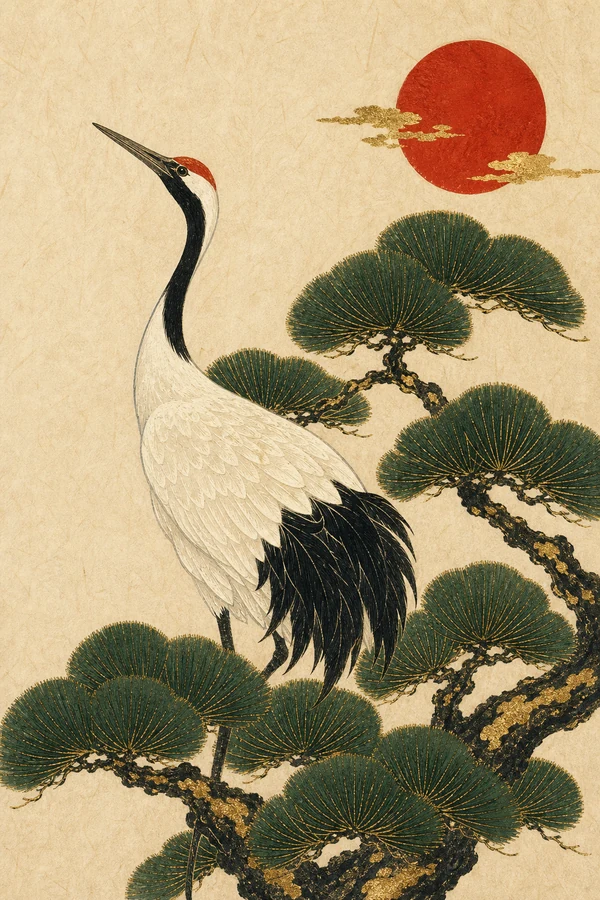
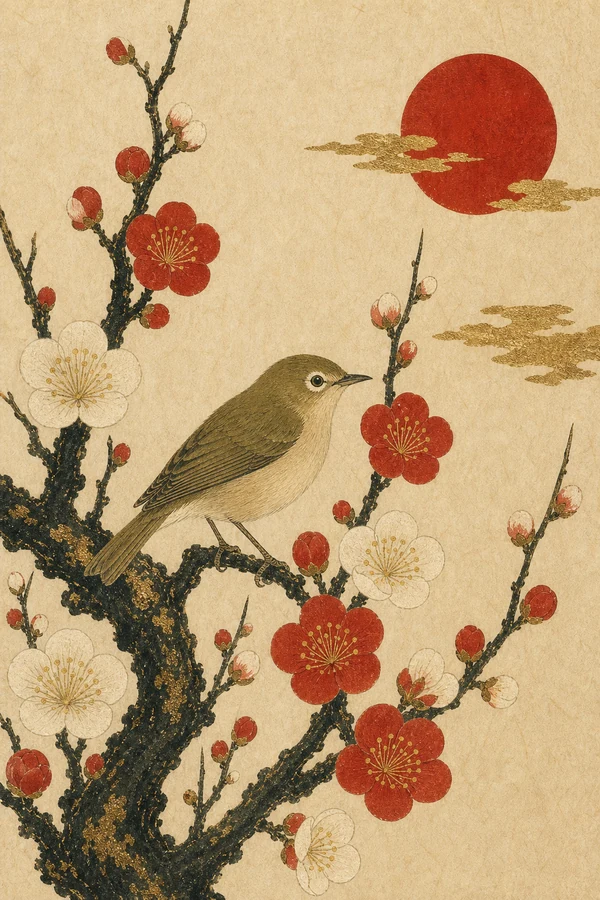
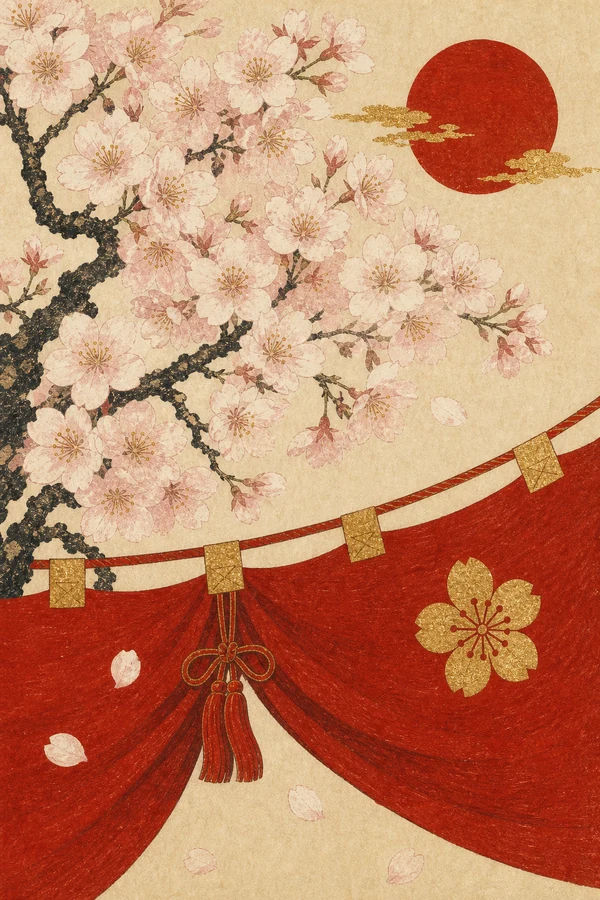
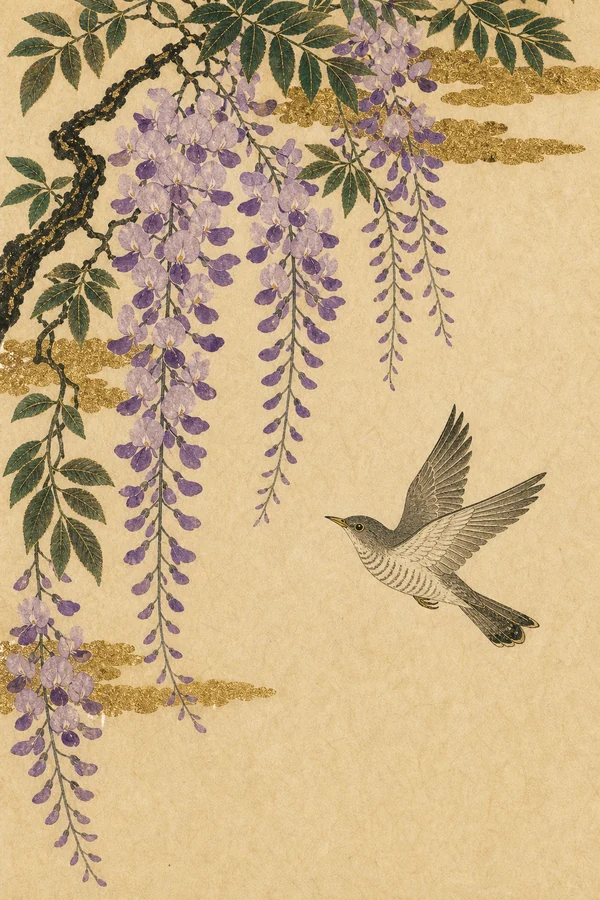
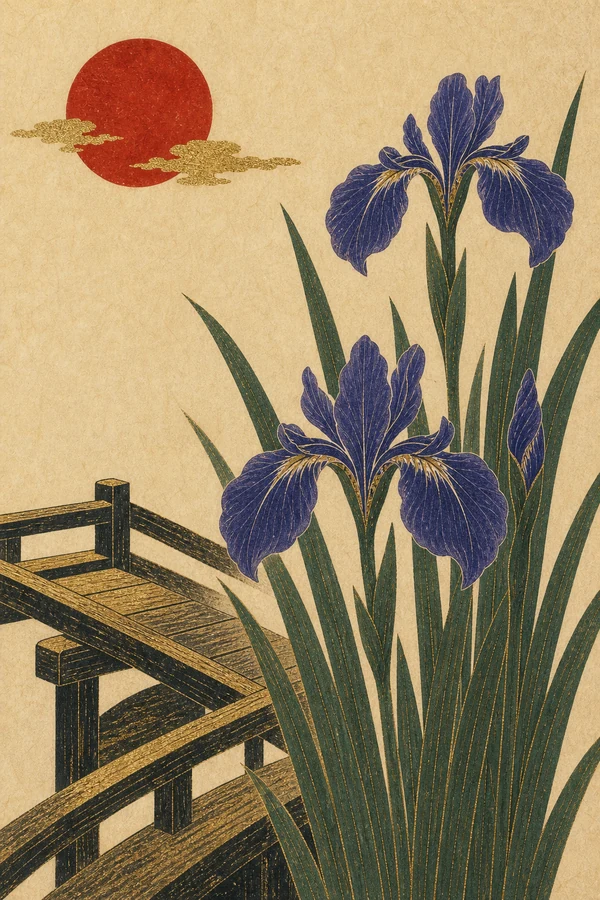
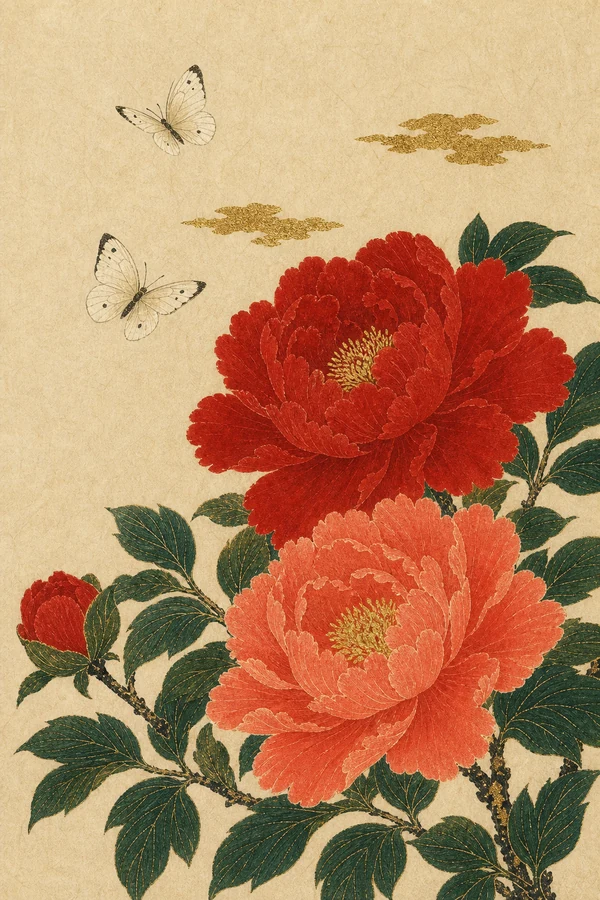
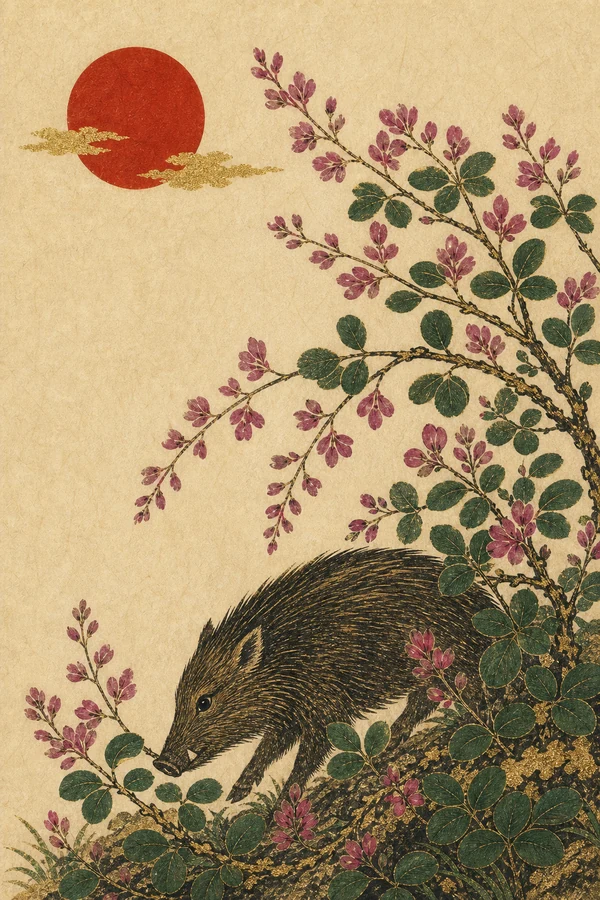
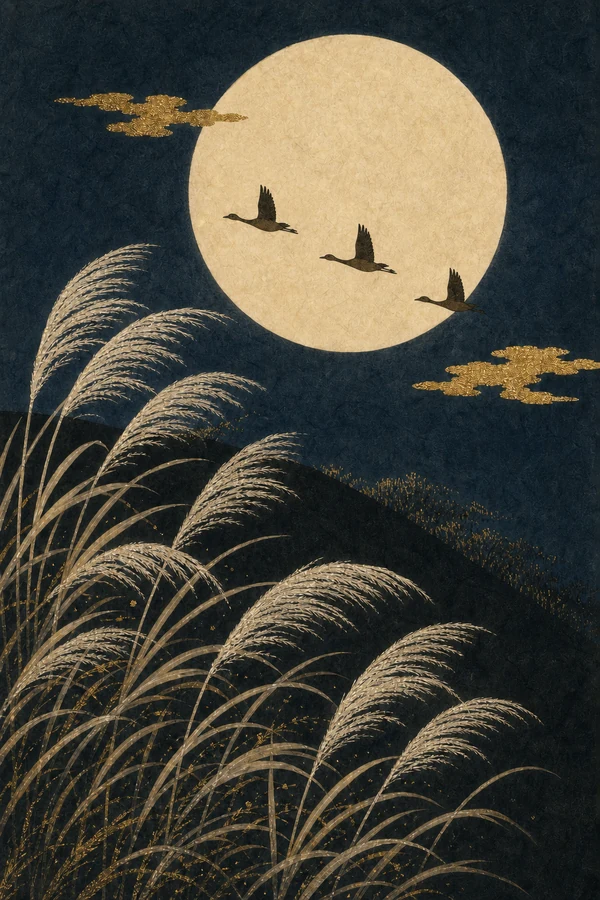
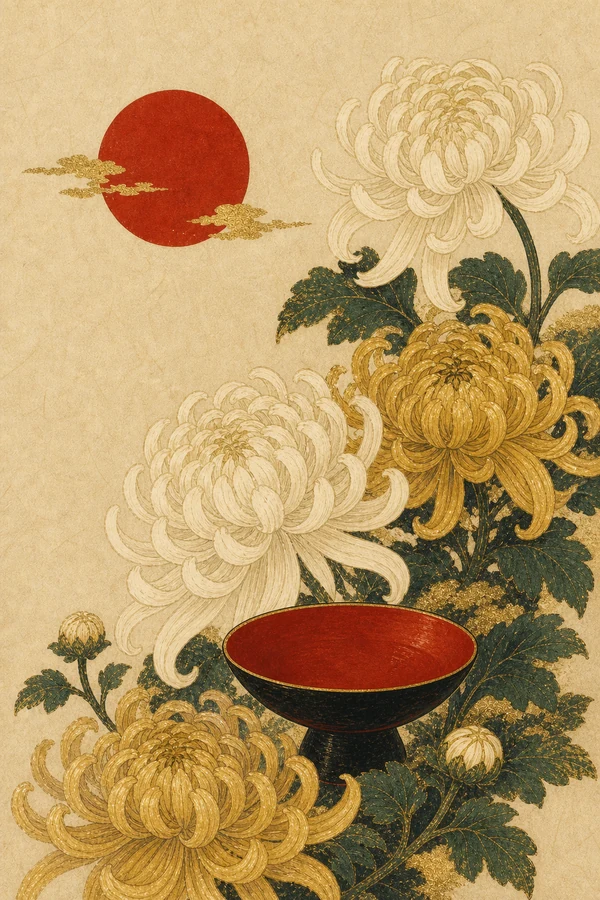
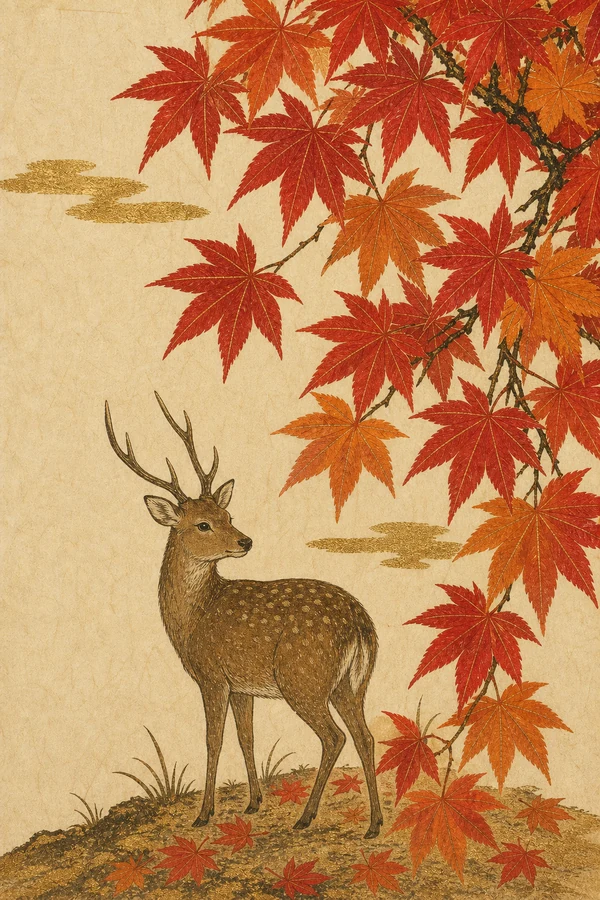
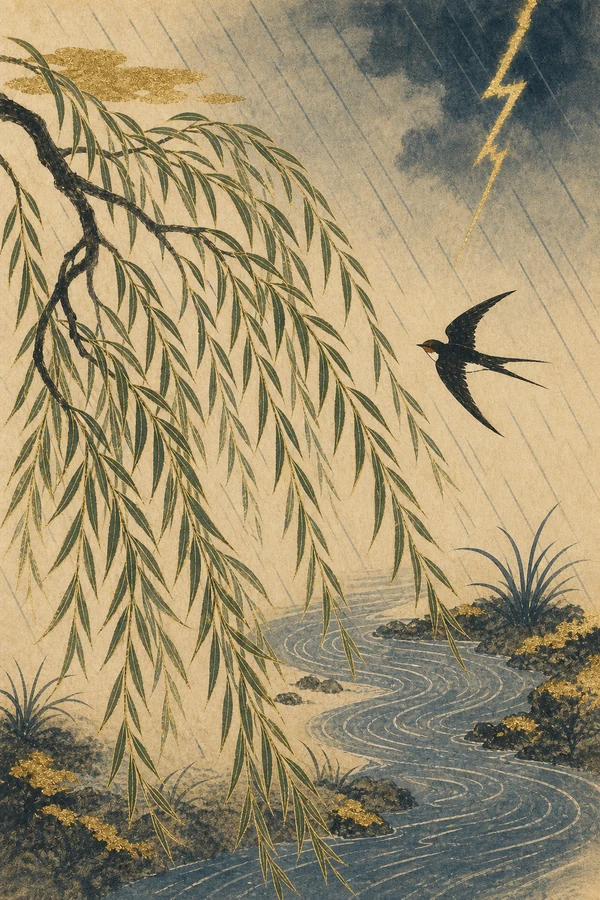
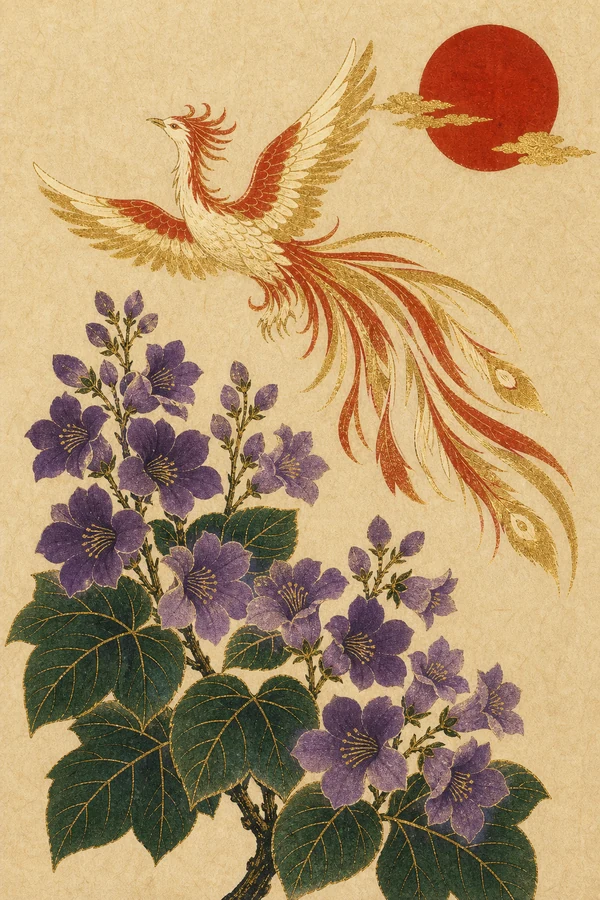
No culture watches the seasons as tenderly as Japan’s. They live in the food, the greetings, the poetry — even in a deck of cards. Now that you can describe things (きれいな はな, a pretty flower), here is a world worth describing.
Each month has a plant—and traditional companions that make its season unmistakable. Read the kana, then let the image carry the memory:
Next → the survival chapter: telling time, city hall & the clinic, and the trains that carry you through all twelve of these months. 🌸