おはようございます
ohayō gozaimasu
good morning · polite
 English←
Chapter 2 · Lesson 1 · choose → say
By the end of this page, you can choose a greeting from the time of day and say your name politely.
Notice, don’t study yet: the final は in こんにちは is pronounced wa. You will meet the reason later.
です is a polite sentence ending. After your name, it makes a safe introduction.
The name is correct. The polite ending is missing. Say the fixed version once, then replace ツキ with your name.
Kanji Story Card · No. 1
This is how every kanji works in this book: not a symbol to drill, but a character to meet. Know one story about someone and their name sticks forever. Here’s your first recruit.
Hito — the Traveler
Person · human · people
Before titles, before numbers, before crowds — just one figure stepping onto the open ground. The two strokes fall apart like a pair of legs mid-stride. No face, no clothes: the barest sketch of a human being, walking forward. They are the humble traveler you’ll meet again and again in Japanese.
Visual hook: two lines forming a walking figure. 🚶
Hito loves to hide inside other characters. You’ll spot them leaning in 休 (rest — a person beside a tree) and standing tall in 大 (big — a person with arms wide). Learn one character, and you’ve started learning a dozen.
Dialogue · notice → build → speak
Your goal is not to memorise a scene. It is to build the same introduction with your own name—then say it without the page.
Look away from Pass 1. Rebuild all three Japanese parts from these meanings.
Close the book halfway. Say the whole introduction to Tsuki.
Real Japan · observe → connect → recall
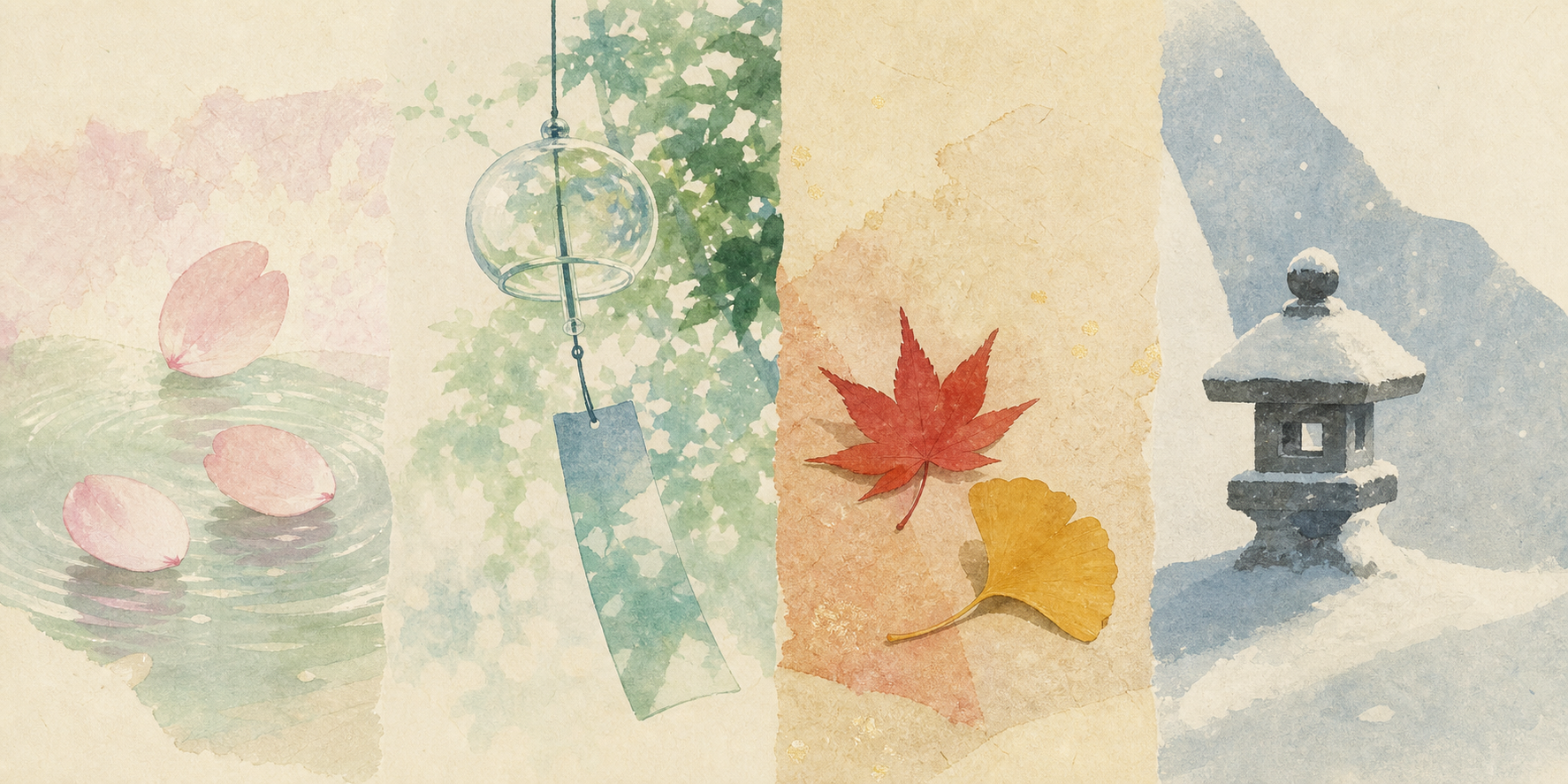
Culture sticks when it gives language a place to live. Here, the seasons become four memory pictures—and spring gives you one word worth carrying.
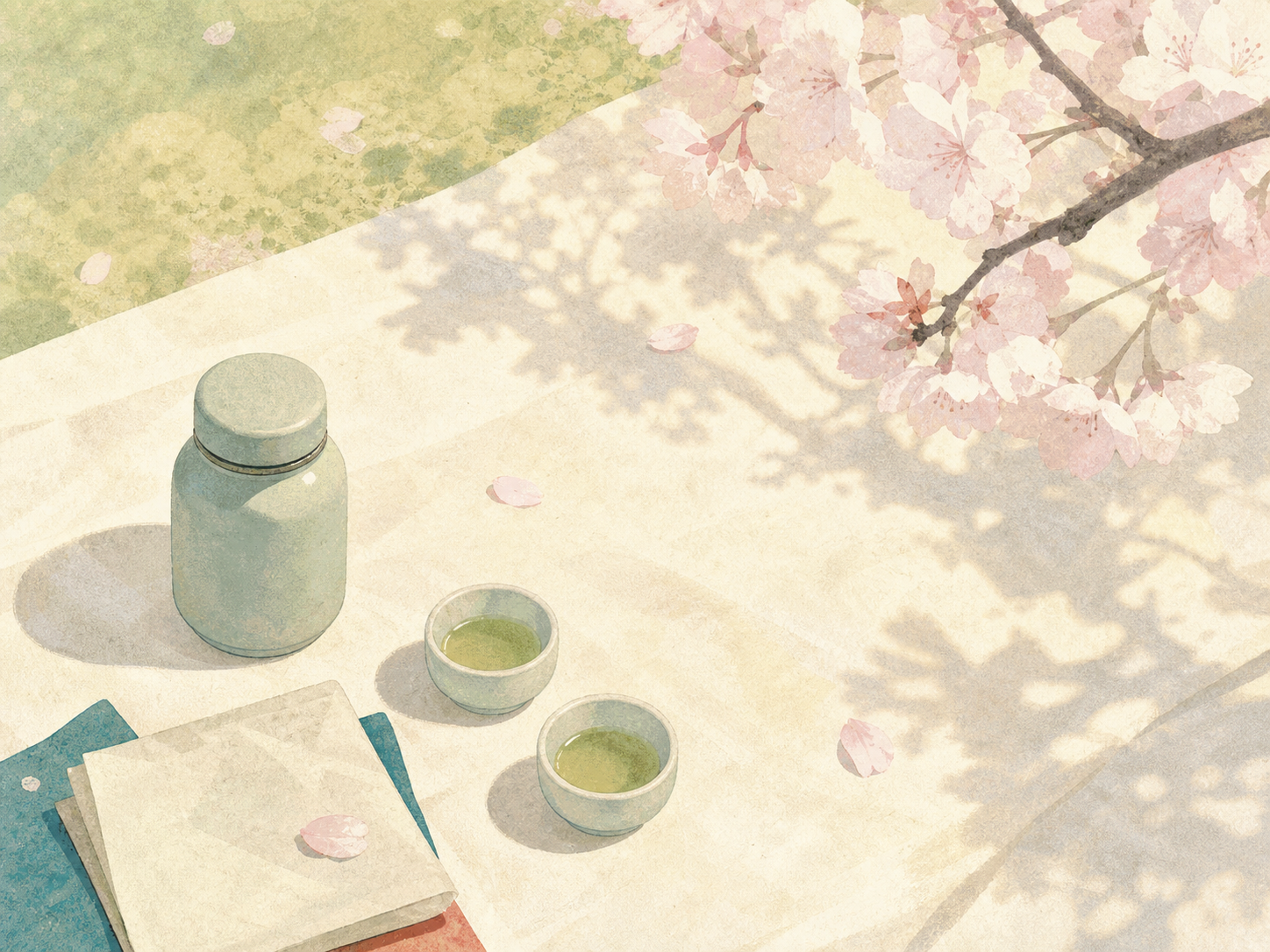
Spring in Japan is closely tied to 桜 (さくら), cherry blossoms. At one place, their brightest bloom may last only about a week before the petals fall.
People gather beneath them for 花見 (はなみ)—literally “flower viewing.” It can be a picnic, a walk, or simply stopping long enough to notice the season changing.
Evidence, not confidence: tick each box only after you perform it without copying.