Something useful first
Begin with a greeting, question or sign that can brighten a real moment. The wider system can grow around it.
 English← Back to selection
A gentle first path into Japanese
言語
A story-led companion for beginning Japanese — made for curious learners of all ages, one useful little step at a time.
A note from the beginning
Japanese starts to feel friendlier when it has somewhere to go: a greeting, a train ride, a little moment you recognise. Gengo begins there, with 38 kanji and three classmates learning alongside you.
Author, designer and creative technologist. More than ten years of direct experience with Japanese culture and academic language study inform this clear, playful approach.
A home for gentle experiments in learning, characters and creative technology — always with a little room for wonder.
The Japanese Gengo — First Edition, English-language preview · 2026.
© 2026 Cesar Borgenkrans · learnjapanese.sparklesnap.dev · Creative/editorial collaboration: Ms. Claudia, Freija & Akami-san · Research: WaifuKanji · Visual baseline: chira-schoolbook · Cast: SparkleSnap. All rights reserved; commercial reuse of the characters, artwork or SparkleSnap identity requires permission.
A note for the journey
If Japanese has ever felt difficult to return to, that feeling is not proof that you cannot learn it. It may simply mean the method did not give you a usable way in. Gengo offers another little path: one moment, one pattern and one try at a time.
Begin with a greeting, question or sign that can brighten a real moment. The wider system can grow around it.
Find Japanese inside a human moment. Then notice the one small pattern helping it work.
Tsuki, Selene and Marina try alongside you, so a first attempt can simply be a first attempt.
A tiny no-look task helps you notice what stayed — even when it is only one word more than before.
A little SparkleSnap note: culture, character and beauty belong inside the learning. They give each new word somewhere warm to return to.
A familiar little route
Meet it once with your eyes, once with your voice, then close the page and see what comes back to you.
Enter a recognisable moment.
Find one useful pattern.
Make it personal or practical.
Close the page and retrieve it.
Quests leave little footprints. Each one shows something you can now do: choose a greeting, read a sign, build a sentence or recognise a kanji. Romaji and prompts quietly fade as those small wins begin to stay.
The learning cast
They are capable, curious and completely new to the language in front of them. Each classmate makes one part of learning visible: attempting, noticing and transferring Japanese into life.
The brave first try · 月
Tsuki speaks before certainty arrives. Borrow her courage: give the whole sentence a try, then see what it wants next.
The pattern finder · 観
Selene slows the scene down and finds what changed. Borrow her attention: name one pattern, not ten rules.
The real-world friend · 話
Marina carries the line into a new person, place or need. Borrow her warmth: let the language make a little connection.
On every lesson, borrow the whole loop: try like Tsuki, notice like Selene, then connect like Marina. Their little rhythm gives the practice an easy shape to remember.
Just meet the system for now
Japanese does not keep its writing systems in separate rooms. For now, simply notice the different jobs they share inside one sentence.
Aim for five steady targets. Natural speech adds small variation, but the vowel identity stays far more stable than it does in English.
Tap once per mora. Length and silence each receive a real little beat of their own.
Cover the script key. Point to the borrowed word in the sentence, tap five beats for おばあさん, then explain what the small っ contributes: one held beat before the next sound.
Chapter 1 · Lesson 1 · choose → say
By the end of this page, you can choose a greeting from the time of day and say your name politely.
Notice, don’t study yet: the final は in こんにちは is pronounced wa. You will meet the reason later.
です is a polite sentence ending. After your name, it makes a safe introduction.
The name is correct. The polite ending is missing. Say the fixed version once, then replace ツキ with your name.
Kanji Story Card · No. 1
This is how every kanji works in this book: not a symbol to drill, but a character to meet. Know one story about someone and their name sticks forever. Here’s your first recruit.
Hito — the Traveler
Person · human · people
Before titles, before numbers, before crowds — just one figure stepping onto the open ground. The two strokes fall apart like a pair of legs mid-stride. No face, no clothes: the barest sketch of a human being, walking forward. They are the humble traveler you’ll meet again and again in Japanese.
Visual hook: two lines forming a walking figure. 🚶
Hito loves to hide inside other characters. You’ll spot them leaning in 休 (rest — a person beside a tree) and standing tall in 大 (big — a person with arms wide). Learn one character, and you’ve started learning a dozen.
Dialogue · notice → build → speak
Your goal is not to memorise a scene. It is to build the same introduction with your own name—then say it without the page.
Look away from Pass 1. Rebuild all three Japanese parts from these meanings.
Close the book halfway. Say the whole introduction to Tsuki.
Real Japan · observe → connect → recall
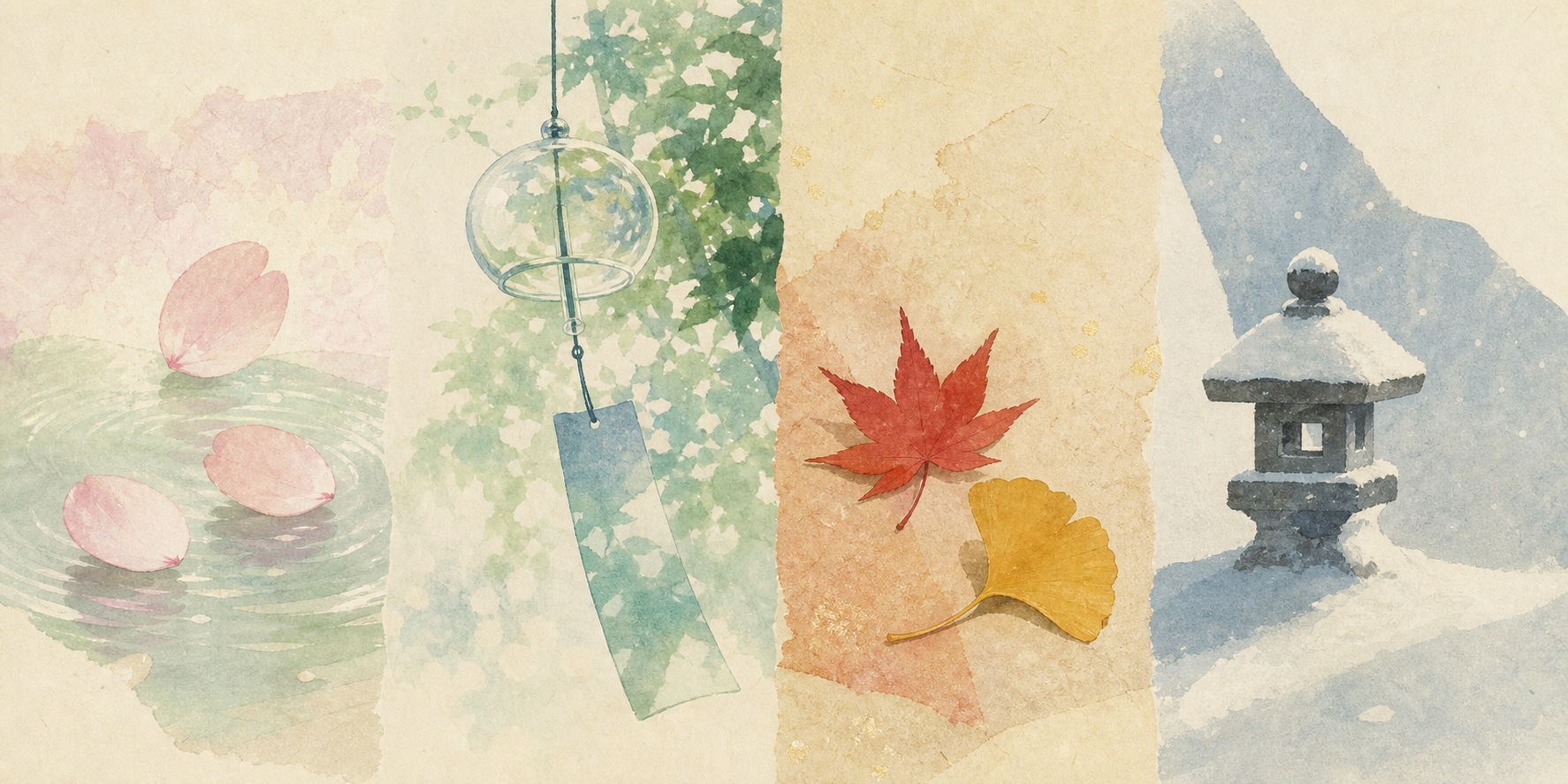
Culture sticks when it gives language a place to live. Here, the seasons become four memory pictures—and spring gives you one word worth carrying.
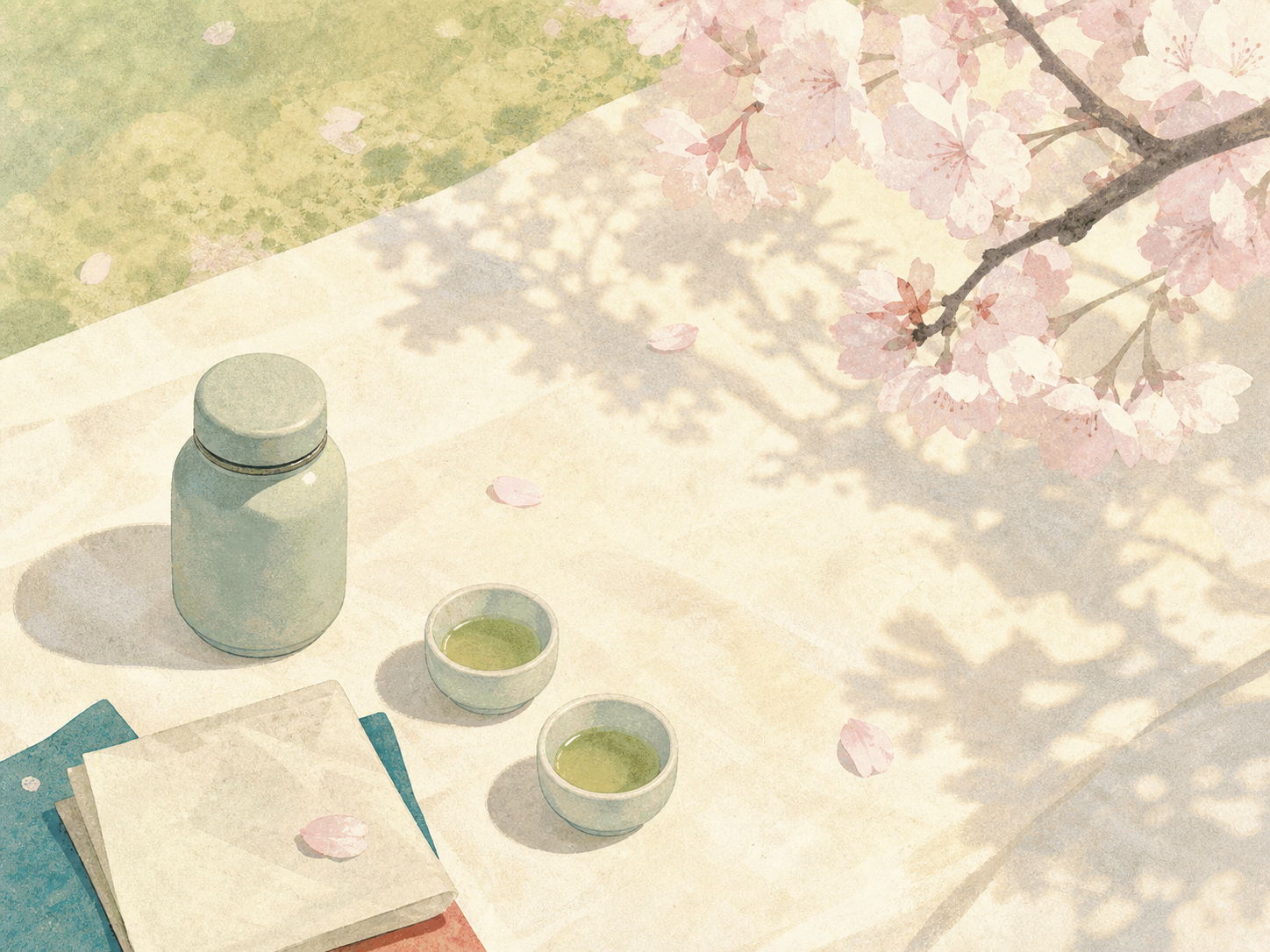
Spring in Japan is closely tied to 桜 (さくら), cherry blossoms. At one place, their brightest bloom may last only about a week before the petals fall.
People gather beneath them for 花見 (はなみ)—literally “flower viewing.” It can be a picnic, a walk, or simply stopping long enough to notice the season changing.
Evidence, not confidence: tick each box only after you perform it without copying.